

We swallow between 500 and 700 times a day—roughly once a minute while awake and three times an hour during sleep. It’s an automatic reflex we take for granted until it becomes a struggle. Dysphagia is also known as swallowing difficulty, is any problem with sucking, swallowing, chewing, eating, drinking, controlling saliva, taking medication, or protecting the lungs from food and drink entering the airway. Swallowing Awareness Day is led by Speech Pathology Australia to raise awareness of dysphagia and the impact it can have on people’s health and quality of life. It also highlights the role of speech pathologists, who assess and support people with swallowing needs.
Dysphagia is the medical term for difficulty moving food or liquid from the mouth to the stomach. While it can affect anyone, it’s most common in older adults due to neurological and musculoskeletal changes.
In Australia, it’s estimated that dysphagia impacts approximately 50-60% of aged care residents (indicated from a range of clinical reports). Symptoms range from mild discomfort with tough textures to severe cases where even drinking water poses a risk. While there’s no universal cure, several strategies improve quality of life:
Since 2019, the International Dysphagia Diet Standardisation Initiative (IDDSI) has provided a framework to ensure food safety. This 0–7 scale standardises textures—from thin liquids (Level 0) to regular foods (Level 7)—giving healthcare providers, chefs, and food manufacturers a precise “common language” to meet each resident’s specific needs.
The scales overlap at texture levels three and four for both food and drink, where everything consumed is the texture of a thick puree. IDDSI’s implementation is important as it gives a single set of standards to refer to when determining a person’s level of capability. The power of IDDSI lies in its universal application. It ensures that a “Level 4” meal in a hospital is identical to a “Level 4” meal provided by a commercial caterer or prepared at home.
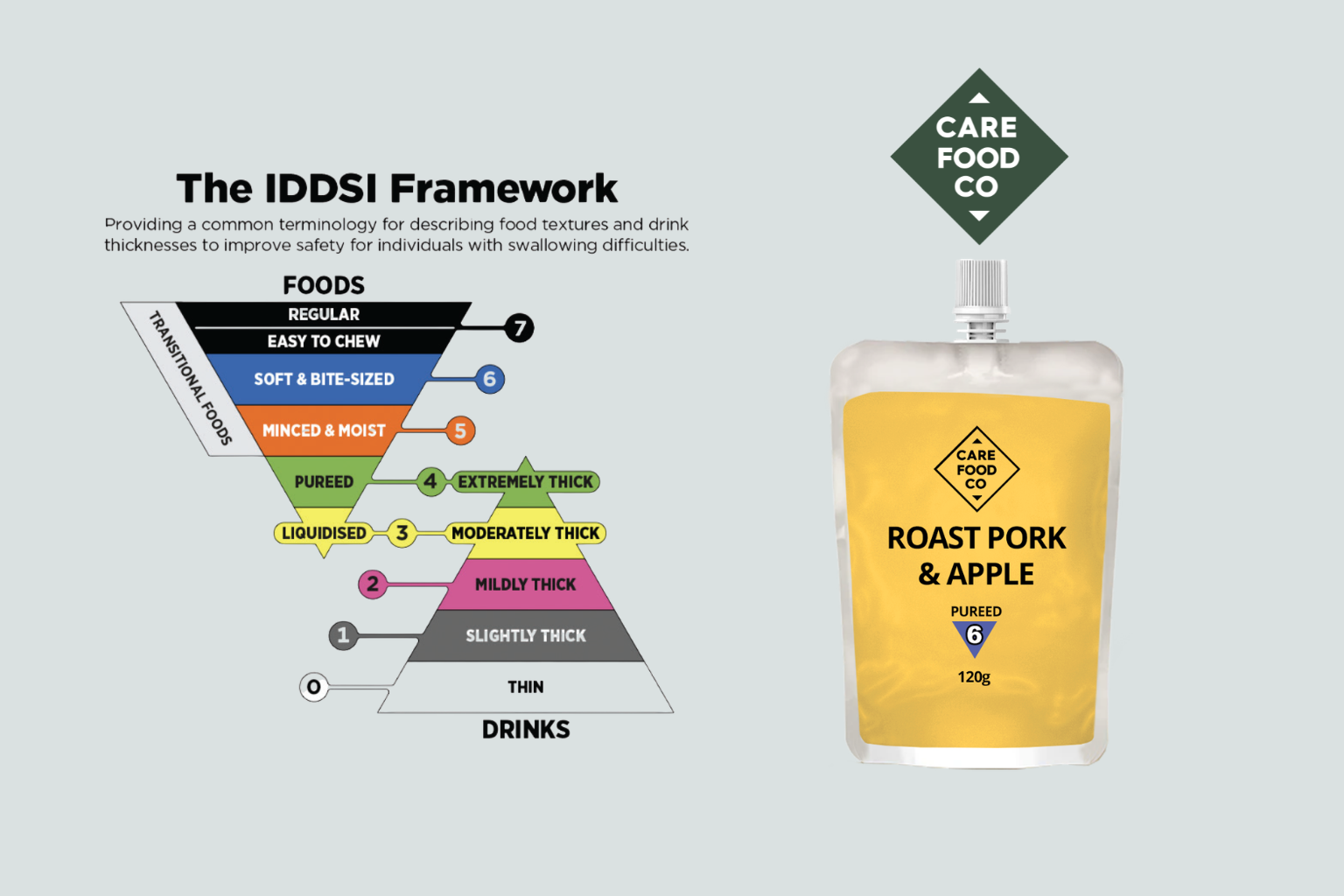
IDDSI provides a diagnostic baseline. Instead of writing “provide soft food,” speech pathologists can prescribe “Level 6,” which has a specific, measurable definition (15mm pieces). And dietitians work with speech pathologists to ensure adequate nutrition intake. Tests like the “fork pressure test” or a “spoon tilt test” can objectively verify if a food item is safe for a patient.
The fork pressure test determines if food is soft enough for safe swallowing by pressing a fork into the sample until the person’s thumbnail turns white—to ensure the food squashes completely without springing back.
The spoon tilt test evaluates a food sample’s adhesiveness and cohesiveness by ensuring it’s firm enough to hold its shape on the spoon, yet slippery enough to slide off easily when the spoon is tilted or gently flicked.
For chefs and catering teams, it eliminates guesswork in the kitchen. IDDSI provides specific testing methods—like the flow test using a 10mL syringe—to ensure every batch of thickened liquid meets the exact viscosity required. This ensures consistency across different shifts and staff members.
For those living with dysphagia, IDDSI offers dignity and safety. It gives them visual cues through the colour-coded system (e.g. green for level 4, blue for level 6) that helps aged care residents and consumers identify safe foods quickly. Consumers and their families are also empowered to learn the simple testing methods (like the spoon tilt test) to advocate for their safety when dining out or at home.
To expand our commitment to accessible dining, Cater Care acquired a majority stake in Care Food Co.. Where other texture-modified foods are often canned or frozen for stability, Care Food Co. uses an advanced food production process to modify the meals’ texture without impacting flavour. This process means that the range of texture-modified food has no added stabilisers, gums, thickeners, preservatives, or other artificial additives. Our meals are 100% fresh, clean food. Care Food Co provides high-quality, IDDSI-friendly meals that are:
This Swallowing Awareness Day, check in with your loved ones to ensure they’re dining with dignity and safety. At Cater Care, we specialise in tailored nutrition and hospitality solutions for several sectors including the aged care and health sectors where dysphagia is a prevalent requirement. We understand the complexities of managing dysphagia and the importance of strict adherence to safety standards without sacrificing the mealtime experience.
Combined with Care Food Co.’s revolutionary range of fresh, additive-free, texture-modified meals, we offer a comprehensive solution that supports clinicians, empowers chefs, and delights consumers.
Source: Most people swallow 500–700 times a day, around 3 times an hour during sleep. https://www.speechpathologyaustralia.org.au/Public/Public/About-Us/News-media-campaigns/Campaigns/Swallowing-Awareness-Day.aspx


