

On remote sites, waste creates real operational pressure. Limited waste removal, long supply chains, extreme temperatures, and inconsistent portioning mean small inefficiencies can quickly add up, affecting costs, logistics, and day-to-day service delivery. Our remote teams continually assess where waste actually shows up in daily operations, and deploy practical changes to make a measurable difference—without disrupting service or resident experience. What we’ve found over two decades of servicing and supporting the remote sector is that sustainability initiatives work best when it solves dynamic, on-the-ground challenges across multiple touchpoints and operations.
A closed-loop composter takes organic waste from a specific source, processes it into nutrient-rich soil amendment (compost) using heat, microbes, and aeration, and returns that compost within the same system. The composters operate at high temperatures, pasteurising the waste to kill harmful bacteria such as E. coli, salmonella, and campylobacter. The aerobic process minimises odours, making it an efficient and clean solution for waste management. Conversely, food waste in landfill lacks oxygen and breaks down anaerobically, which releases methane, a greenhouse gas. Designed for continuous operation, these industry-leading composters handle nearly any food-based waste except for large meat bones, shellfish, and cooking oil. Various models process between 20 and 200 kilograms of waste daily.
The benefits of the closed-loop composter at one of our remote mining sites reduced food waste by 61% in both volume and mass over a 24-hour cycle. That site:
The Pulpmaster 6000 unit is a heavy-duty food waste recycling program to create a recyclable pulp to be converted into organic fertiliser and green energy (biogas). The food waste is processed through the Pulpmaster 6000 machine to be held in the odour-controlled Pulpmaster tank and is serviced when nearing full capacity. Serviced and collected by Pulpmaster Tankers and/or JJ’s Waste & Recycling, the program is automated to keep food waste being processed and disposed of. The Pulpmaster 6000 can process up to 1,000 litres of organic waste in 20 minutes and can dispose virtually all organic waste, cooked meats and small bones, seafood shells, and dairy products. Additionally, small amounts of organic liquids and paper items like serviettes and tissues can be included.
We work with our remote clients to assess the best composting solution based on viability/serviceability and operational considerations.
One of the most common contributors to food waste on remote sites is over-production and inconsistent serving sizes. These factors culminate into higher food usage, fuller bins, and unnecessary transport and disposal costs.
To address this, our catering teams use measured spoodles (30 ml, 60 ml, 90 ml, 120 ml, and 180 ml) to standardise portion sizes across services. This approach helps:

Our measured spoodles are sized for different dishes from rice and vegetables to soups and braised meals. By using smart portioning, service becomes more predictable and efficient. For residents, consistent portions also provide a clear visual guide that supports balanced nutrition and mindful eating, turning waste reduction into something that benefits everyday wellbeing.
Another pressure point for remote sites clients is supporting their environmental impact goals. From an operational perspective, plant-forward meal options can reduce reliance on higher-cost proteins, support sustainability targets, while also responding to resident expectations for plant-based food. Residents increasingly expect choice, including vegetarian and vegan options, but are also choosing to take a plant-forward approach to their meals by making the plant-based components the focus of their meal (proportionally) and make meat/fish, dairy, or eggs as the secondary component of their meal.
When offering a range of food options and philosophies such as plant-forward eating, vegetarianism, veganism etc., this inherently expands mealtime menus and therefore increases the waste outputs if not managed carefully.

Our extensive vegan and vegetarian recipe library allows remote sites to offer plant-forward meals that are practical to produce, flexible to serve, and aligned with operational realities. Our dishes:
These practical, plant-forward options allow us to meet sustainability targets and evolving resident expectations without adding unnecessary strain to kitchens or supply chains.
For crib services we offer reusable takeaway containers and compostable takeaway packaging sourced from responsibly managed and rapidly renewable materials. Reusable containers from Décor Australia are microwave safe and BPA free. BioPak is B Corp certified and uses plant-based materials in its responsibly-sourced compostable container and utensil range. Both forms of packaging require appropriate systems to support use and proper disposal.
Self-washing facilities built into site infrastructure empowers residents to use their allocated reusable Décor containers, which include various sizes for different meals and snacks residents choose from the crib service. Residents use the self-washing facilities to maintain container and food hygiene.
On remote sites, waste management isn’t just about food waste. Packaging, containers, and redundant materials can also accumulate quickly, particularly in places where removal options are limited. At one of our remote sites, we turned this waste challenge into an opportunity to upcycle and grow a community garden. We repurposed polystyrene boxes, old tyres, and IBC containers (large, heavy duty plastic containers used to transport materials) into raised community garden beds, diverting materials from landfill and creating a productive green space on site.
The garden produces herbs, vegetables, native fruits that our chefs incorporate into meals. Beyond reducing waste, the garden provides:
What began as a waste issue evolved into an initiative that supports both operational efficiency and resident wellbeing.
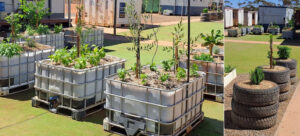
What’s growing on site:
On remote sites, sustainability must work under operational pressure. Portion control, menu design, and site-led initiatives reduces waste, improves efficiency, and enhances daily life for residents without adding complexity to already demanding environments.
By focusing on practical changes that solve real operational challenges, remote catering teams can support sustainability outcomes while keeping service reliable, efficient, and resident-focused.


